Categories
Barcodes for Business News

What is the Importance of Inventory Control?

No matter the industry you work in, inventory control is a vital aspect of your business. Managing your inventory can help you keep track of your products, streamline your sales, and monitor other factors such as ordering and shipment. This could answer questions you have about your products and your sales. How much inventory should you always have on-stock? How large of a storage space do you need?

Today we’re discussing a few key ways improved inventory control can change your business for the better. Ready to learn more? Let’s dive in!

Keep Track of Your Sales

Keeping better track of your products, made possible by utilizing stock labels and documenting them, can improve your sales tracking processes. Not only does inventory control better monitor your sales, it can also increase your sales.

Say you had a product that didn’t sell well. You can keep track of how many times it was sold, and how many products you have left. Then, you can discount that product in retailers and online. At a lower price, you’re sure to increase sales of the product, generating more revenue for your business. If you didn’t practice inventory management, that product could have been sitting in the warehouse, not generating any revenue. You can also gain better insight on what sells best, any trends in sales, and other information on customer preference.

Always Know How Much Inventory To Have

A tricky issue to tackle is knowing how much inventory to store and sell. Ordering too much could result in bad ROI conversions, and ultimately cost you money. Ordering too little could result in stressful situations such as ordering new products in a time crunch. When you properly utilize inventory control, you can keep tabs on how much is too much and how much is too little. If you have leftover stock or find yourself ordering more products, you’ll be able to have better judgment on ordering stock.

Improves Customer Satisfaction

By managing your inventory, you can create a system of ordering inventory for your best-selling products. This is a way to increase your customer satisfaction. Say you have a product that’s popular amongst your customers, and you didn’t order enough of that product. The result? Frustrated customers who could take their business elsewhere. Inventory management allows you to better monitor these sales so you’re sure you have enough inventory, especially during busy seasons.

Prevent Revenue Loss 

Keeping track of your inventory will save your company money, whether it’s directed to sales or cutting costs on storage. You can also keep tabs on specific product information that could result in revenue loss when stored. One example is a spoilage. If a time-sensitive item, such as a food or cosmetic product, is stored past its expiration date, it must be thrown out. Dead stock is another example. If the product is not in season, no longer popular, or completely irrelevant, it can’t be sold.

Improve Your Inventory Control Today!

Controlling your resources can help you better manage your products and deliveries. Moreover, inventory management can even lead to more sales and help prevent loss of revenue. If you find managing your inventory difficult, call us to learn more about how we can help you track your products. We’d love to put the right tools in your hands!

Categories
Barcodes for Business News

How to Choose the Right Barcode Label

You’ve done it. You’re taking the leap from being one of the 46% of small businesses that don’t use inventory tracking technology to streamlining your process and putting yourself on the road to having a more efficient pipeline. There’s just one problem: You don’t know which barcode label type to invest in.

Let’s change that.

Today we’re going over how to choose your barcode label wisely. Ready to learn more? Let’s go!

A Note on Barcode Types

First, a quick overview. There are two primary types of barcodes, 1D barcodes, which are a rectangle or square of up and downline vertical lines and 2D barcodes, which are usually square. There are two primary types of barcodes, 1D barcodes, which are a rectangle or square of up and downline vertical lines and 2D barcodes, which are usually square. Each of these has several variants with their ideal applications, but the biggest difference is that 1D barcodes are linear and can only be scanned one way (think the UPC code on a cereal box when you head to self-checkout with the thin red horizontal line to scan it).

A 2D barcode label, on the other hand, can be scanned in any direction and can store far more data than linear codes. That won’t matter for every application, but more stored data means that a single scan can input that much more information seamlessly into your database. Which of the many kinds of labels you choose from depends in part on your business needs as well as the industry you’re in. Some barcodes are proprietary or are the standard in a certain field, like the 2D Aztec barcode which is used in the Transportation industry, or the Code39 1D barcode which is used by the U.S. Department of Defense (among other applications).

How Durable and Versatile Do You Need Your Barcode Label to Be? 

Once you’ve figured out which type of barcode your industry uses (or if you have the freedom to choose whichever you’d like), consider how durable and versatile the barcode needs to be. The 1D ITF barcode, for instance, has wide spaces and thick lines, meaning it can be easily printed on rough material like cardboard and still be read by a scanner. Therefore it’s used primarily in the packaging industry. Also consider what kind of environment these labels are going to be exposed to, what kinds of surfaces they need to be applied to, and how long they’ll be expected to last in the elements they’ll be stored and shipped in.

Saving Money, Smartly

As with most things in life, better quality labels printed with better adhesives that last longer also cost more. Sure, you could just spring for the top of the line, but good stock management means spending as little as possible to get the job done well and correctly. Related to this, you need to decide whether you want to have your labels printed by a third-party and pre-tested or to invest in your own barcode printer. Some companies, like Idezi, provide extra insurance on your printer investment by guaranteeing protection for unexpected print head failures, depending on the service programs that are available.

We’re Just Scratching the Service

Want to know more? We’ve got the expert barcode tips and industry data you need to make the most educated decision. Learn all about barcode label and scanner technology across multiple industries on our blog today!

Learn more about labels and there different applications.

Categories
Barcodes for Business News Uncategorized

How to Improve Inventory Management with Barcode Systems

[fusion_builder_container hundred_percent=”no” equal_height_columns=”no” menu_anchor=”” hide_on_mobile=”small-visibility,medium-visibility,large-visibility” class=”” id=”” background_color=”” background_image=”” background_position=”center center” background_repeat=”no-repeat” fade=”no” background_parallax=”none” parallax_speed=”0.3″ video_mp4=”” video_webm=”” video_ogv=”” video_url=”” video_aspect_ratio=”16:9″ video_loop=”yes” video_mute=”yes” overlay_color=”” video_preview_image=”” border_size=”” border_color=”” border_style=”solid” padding_top=”” padding_bottom=”” padding_left=”” padding_right=””][fusion_builder_row][fusion_builder_column type=”1_1″ layout=”1_1″ background_position=”left top” background_color=”” border_size=”” border_color=”” border_style=”solid” border_position=”all” spacing=”yes” background_image=”” background_repeat=”no-repeat” padding=”” margin_top=”0px” margin_bottom=”0px” class=”” id=”” animation_type=”” animation_speed=”0.3″ animation_direction=”left” hide_on_mobile=”small-visibility,medium-visibility,large-visibility” center_content=”no” last=”no” min_height=”” hover_type=”none” link=””][fusion_text]

Are you a business owner looking to boost the success of your company?

The answer may lie in smarter and more effective inventory management. Establishing control of your inventory is vital to the success of virtually every business. Read on to find out why and learn how you can facilitate effective inventory management for your company.

Why Inventory Management Is Vital to the Success of Your Business

Maintaining your business’s inventory effectively isn’t easy. If you don’t have enough of what you need, you risk losing customers and sales. This can ultimately take a significant bite out of your profits. However, if you overstock inventory that you don’t need, it can hurt your business in more ways than one.

It’s also important that you have secure inventory control in place so that you can keep an accurate count of any internal or external losses. Here are ways ineffective inventory management can cost you.

Overstocking Inventory

If you are overstocking inventory, you are tying up capital in unnecessary areas. Not only that, the shelf life of products is at hand. A product that stays on the shelf risks losing value, and end up as a total loss if it reaches the point of obsoletion or expiration.

Stock-outs

Every time you are unable to provide a customer the product that they need or want, there is the chance you are not only losing their money but the customer as well. Stock-outs can hurt your company’s production as well as your reputation.

Stock Control in Manufacturing

In manufacturing, inventory is even more detailed because not only do you have to consider end products, but you must also be mindful of each part or component that goes into the whole. Running out of one piece can halt the entire manufacturing process.

How Implementing a Barcode System Can Streamline Your Inventory Process

If you want to ensure effective inventory management for your business, then you should weigh the benefits of a barcode system.

Barcode technology eliminates much of the risk posed by human error. In addition to providing more accurate numbers, it can also assist in tracking what to order. And, it also lets you know when items should be ordered. A barcode system helps to minimize overstocking and understocking issues. It also helps you to gauge your inventory’s productivity and consumer appeal. With the right barcode system in place, you can provide consumers with a better experience and a greater rate of satisfaction, boosting your reputation and your profits. Plus, barcode technology is time efficient and cost-effective, because you won’t have to rely on employers to monitor the inventory.

Find Out How Barcode Technology Can Benefit Your Business

If you are ready to see how more effective inventory management can raise your company’s bottom line, it’s time to implement a barcode system. Want to find out more? Get in touch with a professional who specializes in providing barcode inventory technology!

[/fusion_text][/fusion_builder_column][/fusion_builder_row][/fusion_builder_container]

Categories
Barcodes for Business News

5 Things to Consider When Getting Barcode Scanners

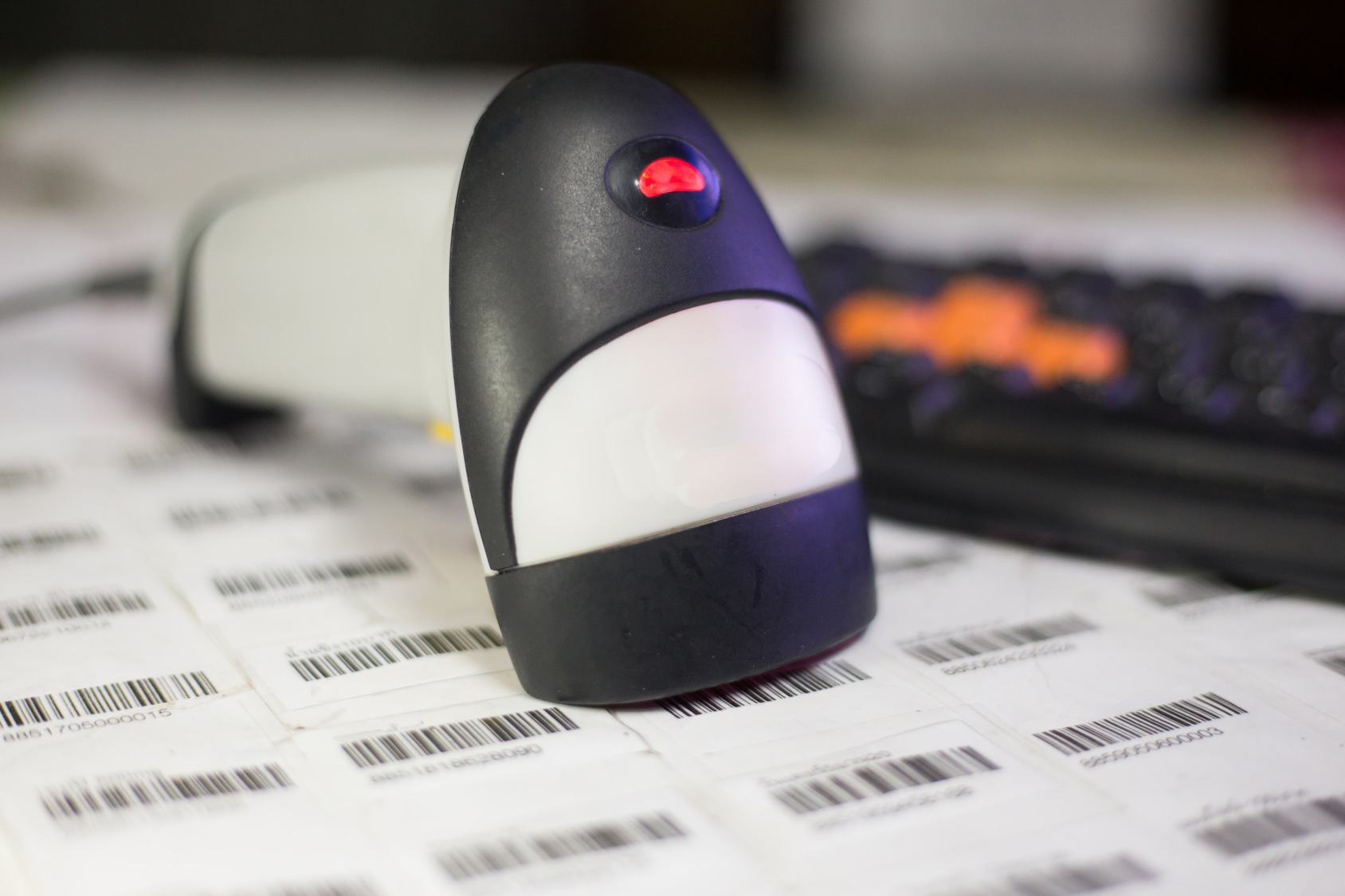
Most people don’t give a second thought to the barcode scanners at the grocery store or gas station. The only time we think about them is when they aren’t working properly. But for many business owners, the choice between barcode scanners is a big decision. There are several types of scanners, from in-counter to handheld, and it’s a lot to think about. However, if you keep a few things in mind while deciding, you should be just fine. Here are the five things to consider when buying scanners.

1. The Form

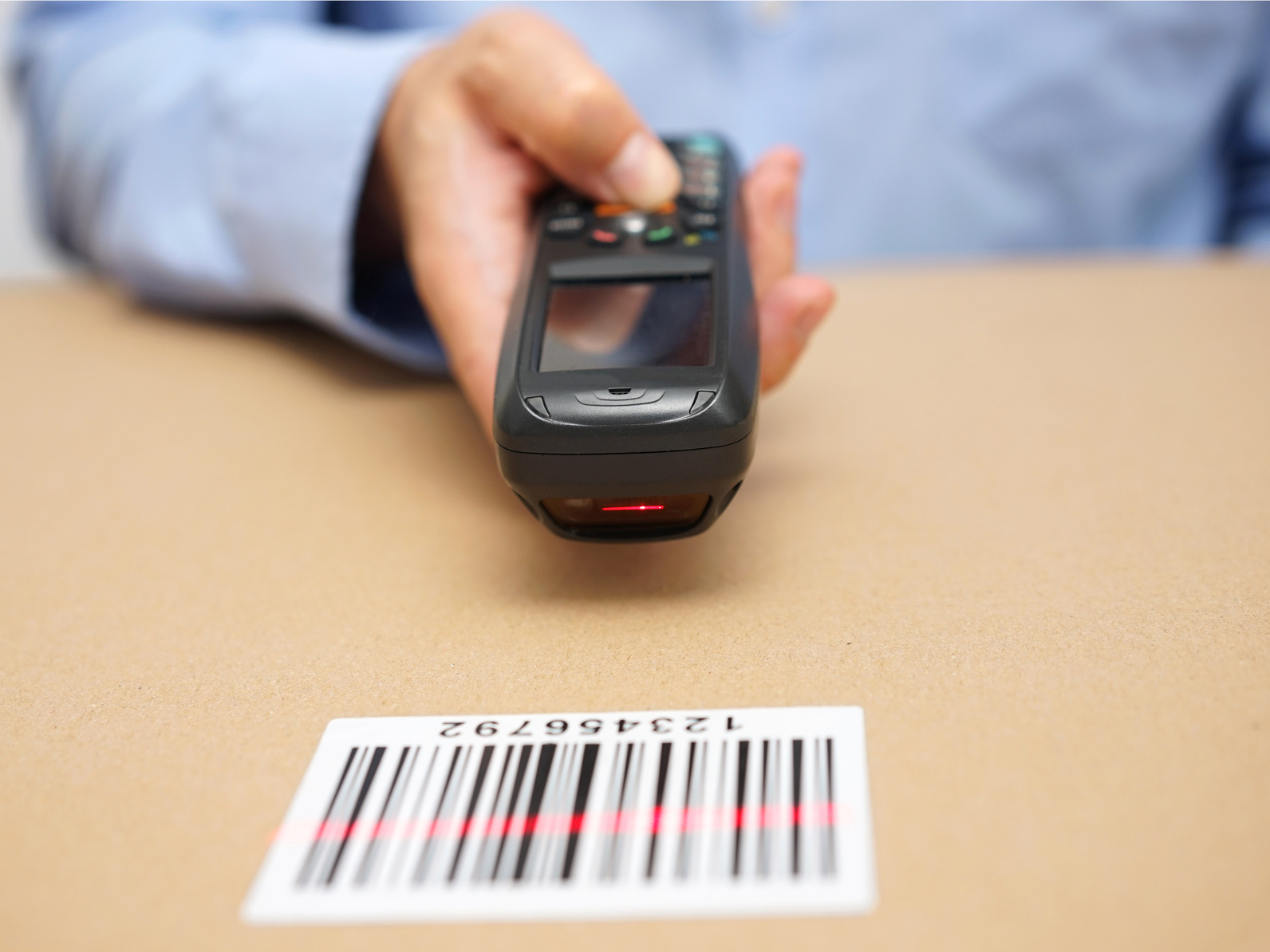
By this, we mean how it’s going to be used. Specifically, we’re talking in-counter, countertop, or handheld. There are slight variations to each, but one of these will likely cover your needs. Grocery stores and other businesses with a high volume of products often use in-counter or countertop scanners. But that probably won’t work for a business with large or awkward products. And it certainly won’t work if your scanning is being done out in the field. For that, you’ll need to go handheld.

2. The Wireless Capacity 

If you are doing your scanning outside of your business, you’ll likely need wireless scanners. They’ll connect via Wi-Fi, mobile broadband, or Bluetooth. This allows your employees to transmit data in real-time, no matter where they are. You might also want to look at wireless capacity if your employees are moving about a large warehouse. Wireless barcode scanners allow them to scan items easily and transmit the data from anywhere in the warehouse.

3. GPS Scanners

Speaking of warehouses, another useful addition to warehouse scanners is GPS. Items that are scanned at various locations are pinpointed by the GPS. This is useful when you’re moving items to and from storage or your business. It’s also a clever idea to have GPS when you’re moving expensive products or any shared equipment.

4. 1D or 2D Barcode Scanners? 

1D barcodes are one-dimensional, and they represent their data with the black bars and numbers we’re familiar with. These are the barcodes that are on most packaging you get at the store. 2D barcodes have both vertical and horizontal data and can contain up to 2,000 characters. That’s compared to the 20-25 characters a 1D barcode can handle. QR codes, a type of 2D code, have become popular recently in marketing. Keep these distinctions in mind when you’re choosing your scanners.

5. Durability

If your employees are simply swiping items at a counter, you may not need the most durable scanners. However, if your scanners are being used in the field, you might want something more rugged and durable. Look for scanners that are sealed from dust and can withstand drops from several feet. They may be a little more expensive, but in the long run, it can be a good investment.

Looking for More?

At this point, you probably still want to dig into some more research on scanners. If you’ve still got questions on the right scanner for your business, then contact us. We’ll help you find the perfect scanner for your needs at the right price.